
EV Charging Cost Australia: What You Pay at Public Bays
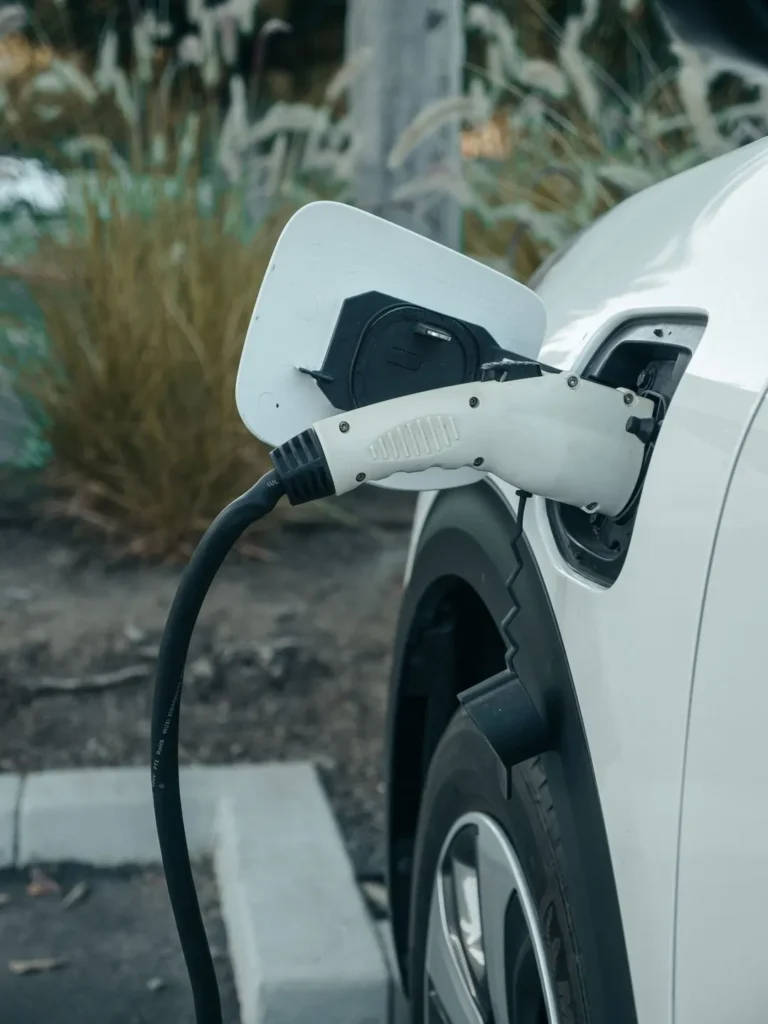
EV charging cost in Australia is the selected site’s tariff multiplied by billed energy or time, plus any applicable extra charges. There is no single verified public rate for the country. Compare the exact connector and payment method before starting.
Network pages checked 2 November 2026. Use the charging cost calculator with your checked tariff and billed energy, then use the charger map or journey planner to shortlist suitable stops. The calculator starts with editable example figures and excludes parking, idle fees and subscriptions.
Where three networks tell you to check prices
| Primary source | Price check | Extra detail to confirm |
|---|---|---|
| Chargefox driver FAQ | Check the app for the location’s price. The FAQ says some sites are free and some charge per kWh. | Selected connector, cable requirement and separate site parking conditions. |
| Evie cost FAQ | Open the site and connector in the Evie app for current pricing. | Payment method supported by that unit and the amount shown before authorisation. |
| Tesla Australia Supercharging | Check the selected site’s displayed price and time-of-use terms. | Applicable congestion fees and any membership rate for an eligible other-EV session. |
The linked Evie FAQ was published in July 2023. Its indicative whole-vehicle amounts are not a current quote for your battery or stop. The useful instruction is to inspect the connector’s current price. We aren’t freezing app tariffs into a national price table.
Worked example: energy plus parking and overstay
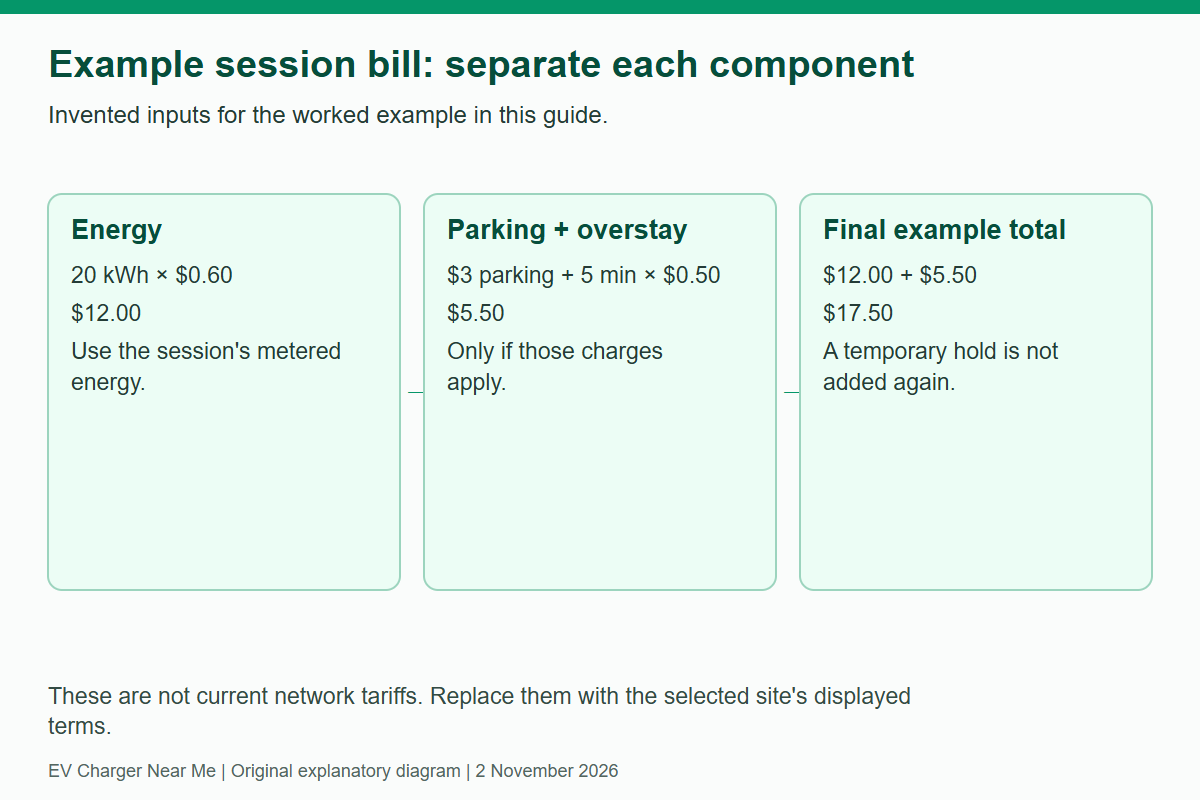
The following amounts are invented to explain billing. They are not actual Chargefox, Evie or Tesla tariffs. Suppose a site charges $0.60 per kWh, the session records 20 kWh, parking costs $3, and its stated overstay terms produce five chargeable minutes at $0.50 per minute.
| Example charge | Calculation | Amount |
|---|---|---|
| Energy | 20 kWh × $0.60 | $12.00 |
| Parking | Separate flat charge | $3.00 |
| Overstay | 5 chargeable minutes × $0.50 | $2.50 |
| Total | $12 + $3 + $2.50 | $17.50 |
Don’t add a card authorisation hold as a second final fee. Check the receipt and card transaction once the session settles. Likewise, an estimate based on the dashboard’s battery percentage is not the same as the billed meter reading. Use the session record for the cost calculation.
Per-kWh and timed charges measure different things
A per-kWh tariff charges for metered energy delivered under the operator’s terms; it doesn’t establish exactly how much remains stored in the battery after charging losses. A per-minute tariff depends on elapsed chargeable time and any applicable rate tiers. Read the unit and fee trigger carefully.
With timed billing, a slower session can cost more to obtain the same energy. With per-kWh billing, a slower session may still increase separate parking time. Neither billing method tells you how fast your car will accept energy. See CCS2 and Type 2 compatibility before comparing two stops.
Check fee triggers, not just the headline rate
Tesla’s Australian fee guidance describes conditions for congestion charges. Read the selected site’s current trigger, grace period and amount. A congestion charge need not mean the battery has reached 100%.
Site parking signs can impose their own charge or time limit. A charging app’s price is not permission to ignore those signs. Check whether a membership changes the energy rate and what the subscription costs; don’t assume a discount makes sense for one occasional session.
Our public charging payment guide covers apps, cards and authorisation. Use the start-and-stop walkthrough to end the session properly and move when finished.
Compare home and public charging on the same basis
For home charging, use your electricity plan’s applicable rate and metered energy, including any time-of-use period. Installation and equipment costs are a separate budget. A workplace charger may be free, subsidised or billed; check the employer’s actual arrangement.
For two public stops, compare the energy required, compatible connection, applicable fees and access. Keep realistic charging time and the detour in the decision. A lower tariff is of little help if the connector doesn’t match or the site is unavailable.
Keep receipts and the station ID if a session fails or the total differs from the displayed terms. Raise the query with the network that billed you. The directory provides location information; it does not set the network’s invoice.
Frequently Asked Questions
What is the Australian public charging rate?
There is no single rate established here. Check the exact site, connector, payment method and session terms in the network’s current interface.
Is public charging always dearer than home?
No universal comparison is established. Compare your home tariff and the public session’s full cost for equivalent energy; some public sites may offer free charging.
Does an idle or congestion fee only start at 100%?
Do not assume that. Check the network’s trigger and the selected site’s displayed terms; Tesla describes congestion conditions that can apply before 100%.
By EV Charger Near Me Team. Updated 2 November 2026. About · Browse locations
Compare public charging stops
Compare recorded connectors, power and access, then confirm current details with the operator.
Related guides


Need another charging stop?
Browse recorded charging locations or read more guides on using public equipment.
Find EV chargers All guides